
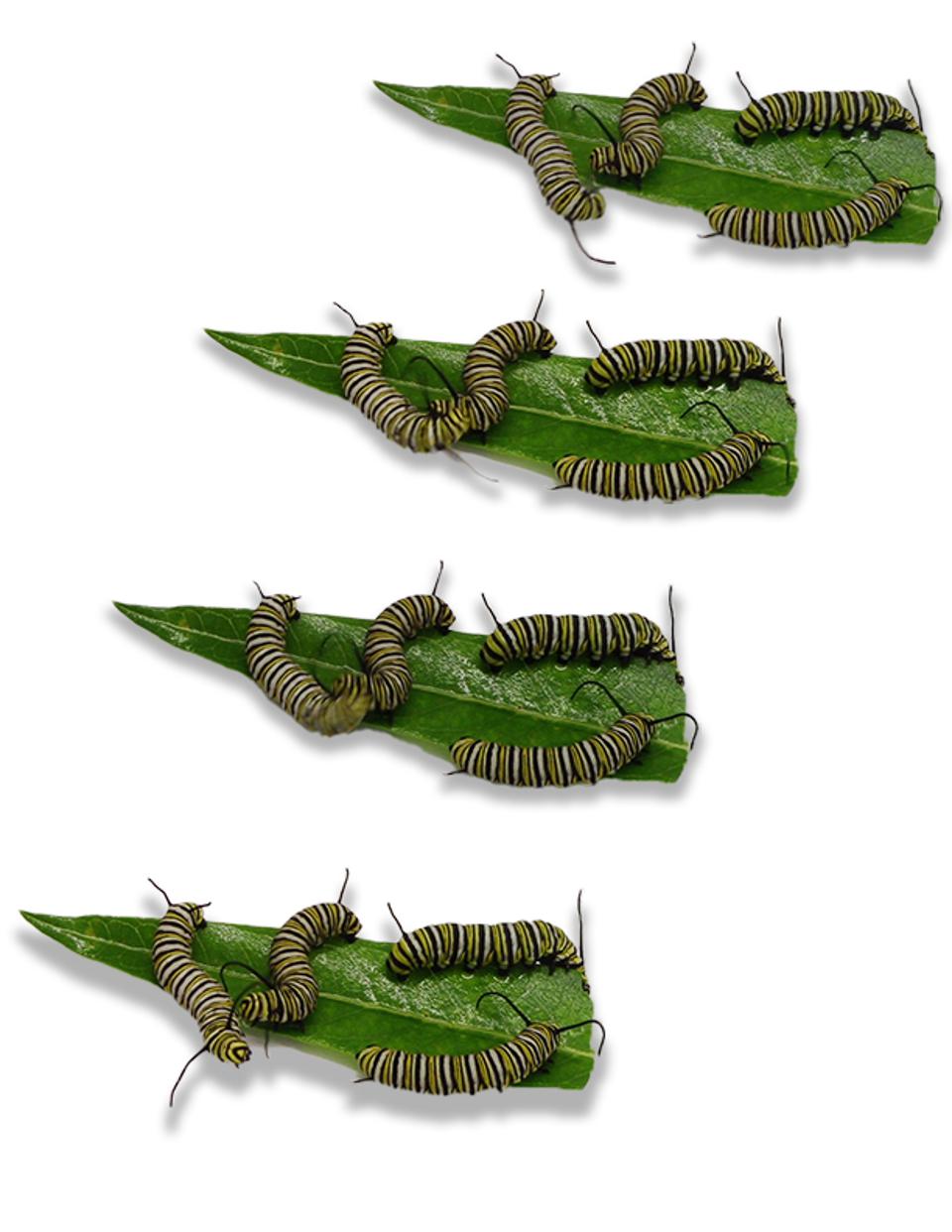
When you get hungry, does your aggression increase? For caterpillars this is common. Through a study done by iscience, Caterpillars fight each other when they are fighting over milkweed. This is something scientists are trying to use to understand aggression in human beings.
Why are scientists hosting a fight club for bugs?
Alex Keene, the lead author of iscience and neuroscientist, together with his wife, watched caterpillars fight over food in the garden at his home. This was not something that he had seen or learned about in his years as a scientist. He did not find any scientific backing about the aggression in monarch caterpillars. He, however, confirmed that through the internet, that this was not a new thing but a normal phenomenon among monarch caterpillars.
He found videos of caterpillars behaving this way on YouTube and knew it was not unique to his garden only. The YouTube videos showed different behavioral changes in caterpillars. He stored caterpillars in plastic containers in his lab to experiment. Caterpillars were stored in groups of four. During feeding time, the caterpillars would head-butt each other. After finishing the experiment they returned the caterpillars to the wild.
Keene is hoping that the study he did on the caterpillars can help with understanding human aggression. Studying aggression in fruit flies, scientists can map out genes and neurons linked to aggression. They are two demographics of monarchs, East and West, where each has different behaviors. He hopes scientists can map the genomes of the two populations to see their differences and how that will help scientists understand how different genes affect aggression. The next step is to look at the caterpillar’s aggression in their natural habitat without controlling the environment. Orley Taylor, a scientist practicing at the University of Kansas, says that this might be difficult. This is mainly because the larvae do not exist in high-density populations naturally.
Human beings have made small patches of the best habitat for the caterpillars by making monarch gardens. The monarch gardens are favorable and allow the population to grow. Monarch Watch, an organization that Taylor heads, is encouraging people to have monarch gardens. As the monarch gardens mature, predators start attacking the garden. As a result, milkweed plants reduce as well as caterpillars. If a scientist can have diversity in populations and more predators then he can control the monarch population in the gardens.
Andy Davis, a scientist studying monarchs at the University of Georgia, said that the caterpillars fighting was not something surprising because he had seen caterpillars head-butting each other first hand. He said the study was accurate by identifying why the caterpillars fight. The study can help find out the aggression genomes in human beings and why aggression increases at different times. If a human being’s aggression is directly linked to hunger then the study can show which genes control aggression. Scientists are working hard to explain this phenomenon in human beings. Science has played a significant role in the study of genomes that control human behavior from the study of certain animals.