
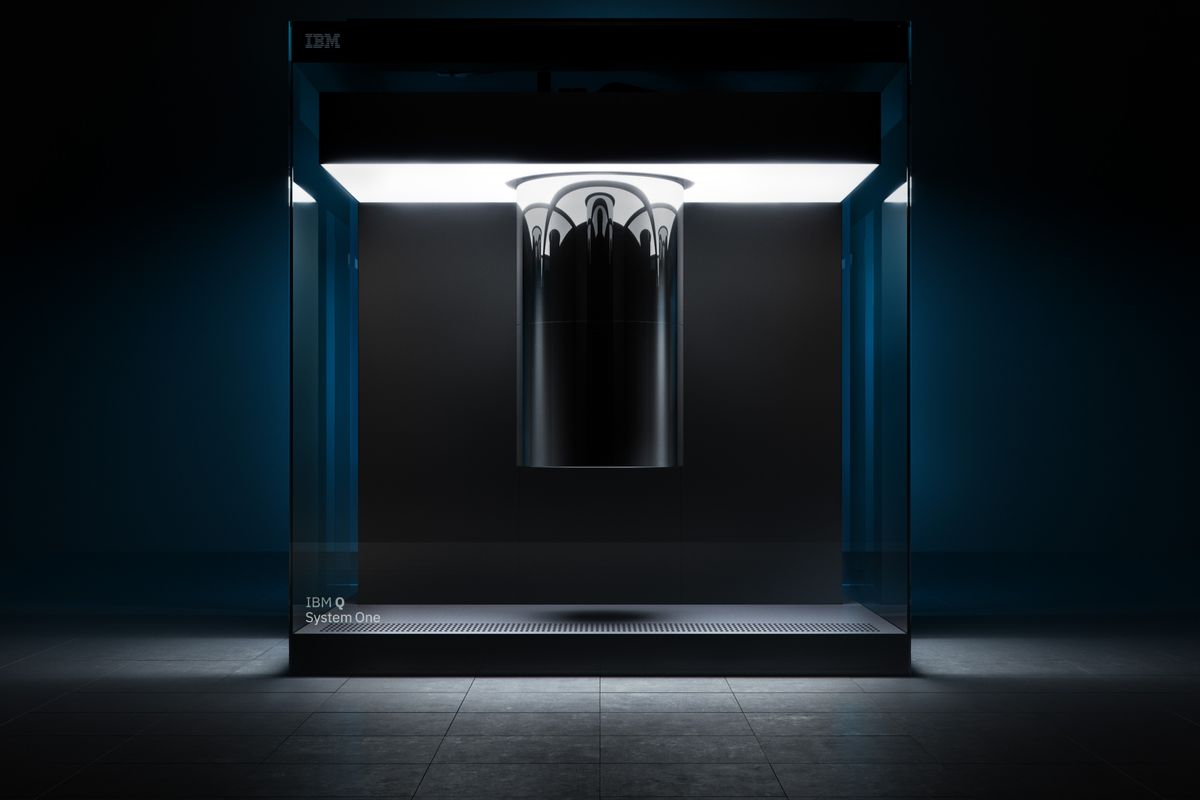
For decades, there has been a lot of buzz about quantum computers. Quantum computers are said to be the greatest computing technology of the century. This article will not need prior knowledge of quantum physics or computer science.
Quantum computers are computer technology based on the principles of quantum theory. They use the principle of superposition. The rule states that an electron (or any other subatomic particle) can exist in two places simultaneously. This principle makes it hard for engineers to develop quantum computers. The supercomputers we have today cannot simulate the superposition principle.
A quantum computer can perform arithmetic in seconds, which would take supercomputers years. While classical computers process information in 0 or 1 binary codes, quantum computers use 0, 1, or both. These are known as qubits and can also have negative values. Many computer engineers have termed the development of quantum computers as impossible. The process is too complicated for it to be sustainable or reach a working model.
To make the classical computer twice as fast, it will have to be twice as large. Take the Fugaku in Japan or Titan in the United States. These are the world’s fastest supercomputers. They are also massive in size. It takes one additional qubit to make a quantum computer faster. This speed is due to the computer’s exponential scale of its computational power. All thanks to the superposition principle. The electron can look for numerous solutions to a problem simultaneously.
Many venture capitalists invested billions of dollars in financing quantum computers’ development. There seems to be a ‘quantum rush’ even though a working model is decades away. This rush is due to their numerous applications. Quantum computers can help scientists speed up scientific discoveries like machine learning and artificial intelligence. Biochemists also can use them to simulate molecules to build new drugs. The computers can simulate economic forecasts, risk analysis, and solve the climate crisis.
Unfortunately, quantum computers are infamously fickle. Changes in temperature or interference from magnetic waves can cause them to mess up. The qubits are also affected by noise in the electronics. It is, therefore, hard for computer engineers to make calculations on the setup before the electron changes position. There is inadequate time to do the math.
Quantum computers are not meant to replace classical computers. They are intended to assist in areas that classical computers fall short. It is difficult to predict how quantum computers will affect our world. There are, however, endless possibilities in the quantum world.