
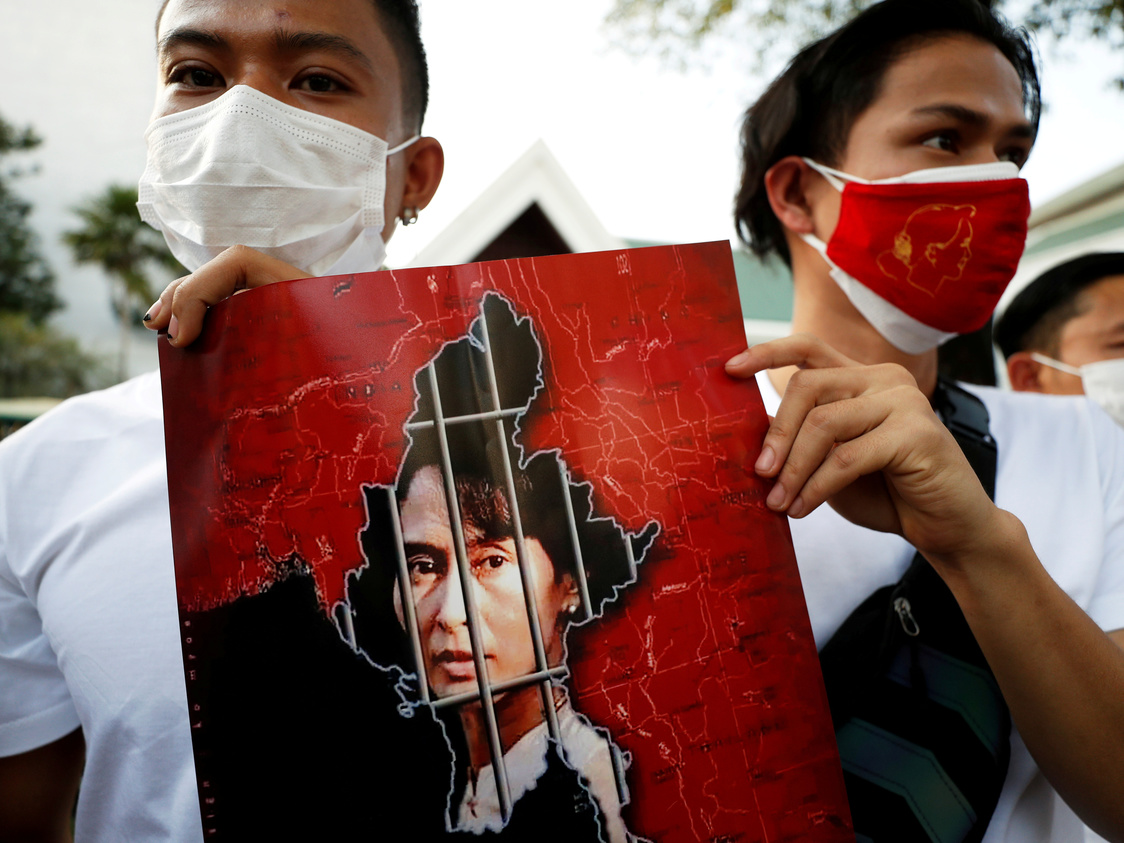
Nearly 50 Western international companies mainly in Myanmar, including Coca-Cola, Facebook, Unilever, H&M, Heineken, and Nestlé signed a statement expressing concerns about the military coup in Myanmar. However, Asian companies have largely kept a low profile.
“As investors, we live in a public space with Myanmar people, including civil society organizations, where all of us benefit from fundamental freedoms, democracy and human rights respect. This includes association and expression freedom, and the law rule” read the document by the Myanmar Centre for Responsible Business, a Yangon-based organization advocating for corporate human rights.
Military Government
MCRB started to convene signatories in February, but it wasn’t until a month after the coup that interest in the company began to heat up. After 18 civilian protesters died last week, foreign governments and companies are now free from their initial reluctance to speak out against the military government.
Nishimura & Asahi, one of the four largest law firms in Japan, became recent to join hands with the MCRB manifesto on Thursday. On the same day, the Yangon Foreign Chamber of Commerce, which represents American and European companies, issued a joint statement stating that although military officials were invited to speak, they would still not meet with the military government.
Increasing Pressure
Certain military leaders have been sanctioned by the United States and Britain, both of which are permanent members of the United States Security Council and Canada. In the MCRB statement, these 49 companies (number as of March 5) pledged to comply with sanctions and due diligence regarding human rights and corporate integrity.
The statement appeared because of the increasing pressure on businesses from the international community. The Central Bank of Norway announced on Wednesday that it will monitor Kirin Holdings, a Japanese beverage group to prevent it from being excluded from its US$1.3 trillion sovereign wealth fund through an alliance with a military subsidiary in Myanmar.
Human Rights
Last month, civil society groups, including Human Rights Watch, filed a complaint with the UN Business and Human Rights Working Group about Japanese companies involved in a commercial development venture called Y Complex in Yangon. The complainant requested the agency to investigate whether the venture was bringing to the military “immovable assets”.
MCRB director and former British ambassador to Myanmar Vicky Bowman said: “Our statement is intended to show that businesses have a common stand with journalists and human rights defenders. If the room is closed, it is not good for the businesses.”