
Elon Musk has the lead in the race to put electric vehicles on the road. Every auto manufacturer on the planet has an electric vehicle in its future product line. The big hurdle in electric vehicle acceptance is the driving range. Most electric vehicle batteries have enough power for a long road trip as long as it is less than three hundred miles. Plus, the lengthy charging time turns consumers off.
In 2010, Panasonic Bought 1.4 Million Shares Of Tesla For $21.15 A Share
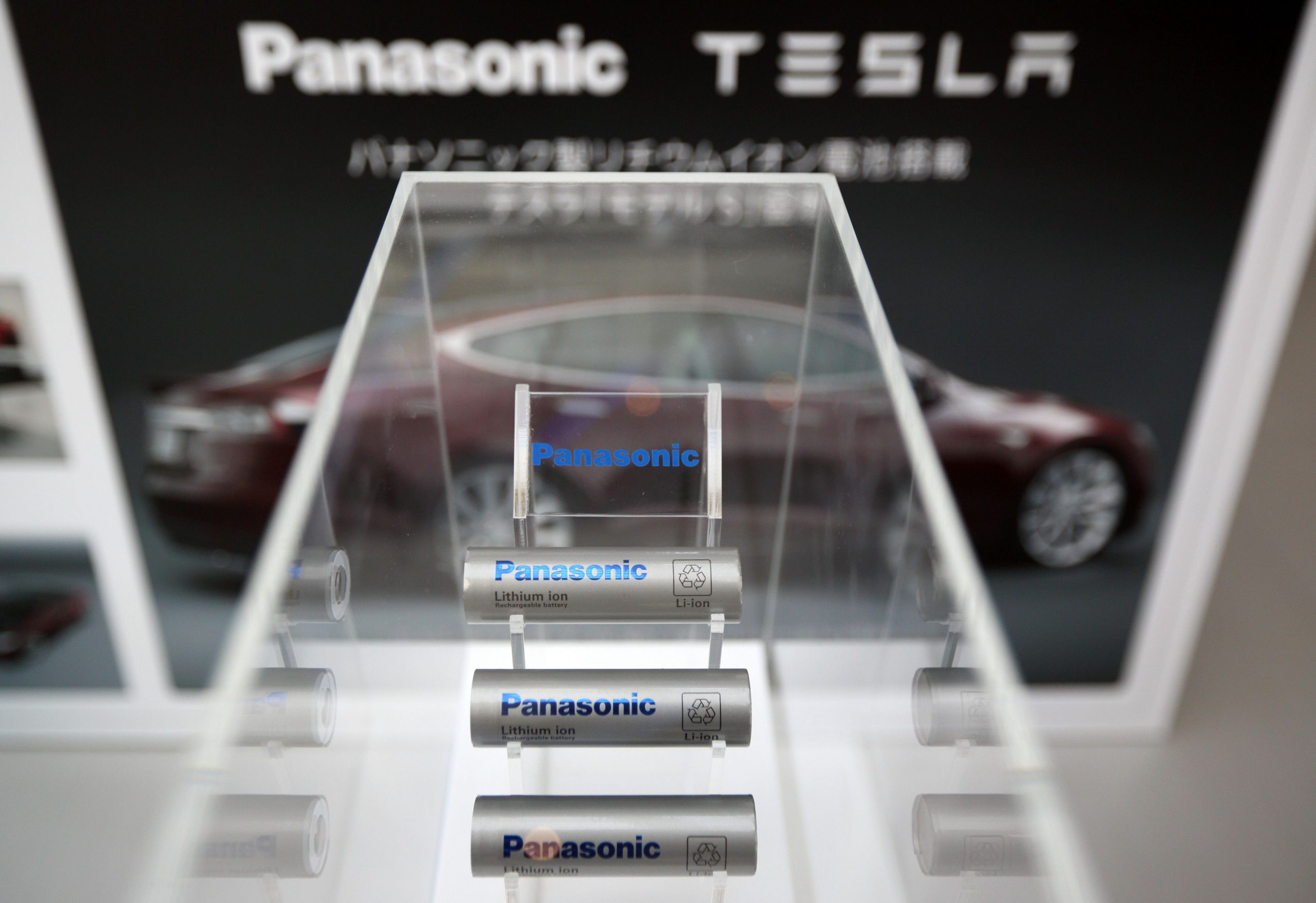
Panasonic is Tesla’s battery partner. Panasonic bought 1.4 million shares of Tesla in 2010. Those shares had a value of $30 million. Panasonic’s shares had a value of $730 million in 2020. Panasonic sold those shares in May for $3.6 billion. A Panasonic spokesperson told the press his company is still a prime battery source for Tesla.
But in order to secure enough batteries for future production, Mr. Musk struck a deal with LG Energy Solutions, a subsidiary of South Korea’s LG Chem. According to Reuters, Mr. Musk also entered a battery partnership with CATL, a Chinese energy company. CATL plans to build a battery plant near Tesla’s Shanghai Gigafactory.
Panasonic is still Tesla’s main battery supplier, but the working relationship between the two tech companies is not always positive. Executives from both companies throw shade at each other on Twitter on a regular basis, according to The Street.
Strong Consumer Demand For Electric Vehicles Is In Its Infancy
The auto companies know the future is electric vehicle production and self-driving vehicle sales. Honda just announced its plan to phase out all gas-powered cars by 2040. Tesla has a lot of future electric vehicle competition. Ford and GM plan to introduce several electric-powered trucks along with a line of battery-powered cars and SUVs.
Tesla stock hit $680 a share recently. Shares in Panasonic jumped almost 5% when the news Panasonic wanted to cash out as a Tesla shareholder. Selling shares in a company that is still a business partner is not unusual. But given the relationship between Tesla and Panasonic executives, it was inevitable.
It’s unclear if Tesla executives plan to distribute its battery business to a group of battery makers or try to produce company batteries without the help of outside vendors. Due to the nature of battery production, Tesla will need outside battery suppliers and in-house battery production to keep up with demand.