
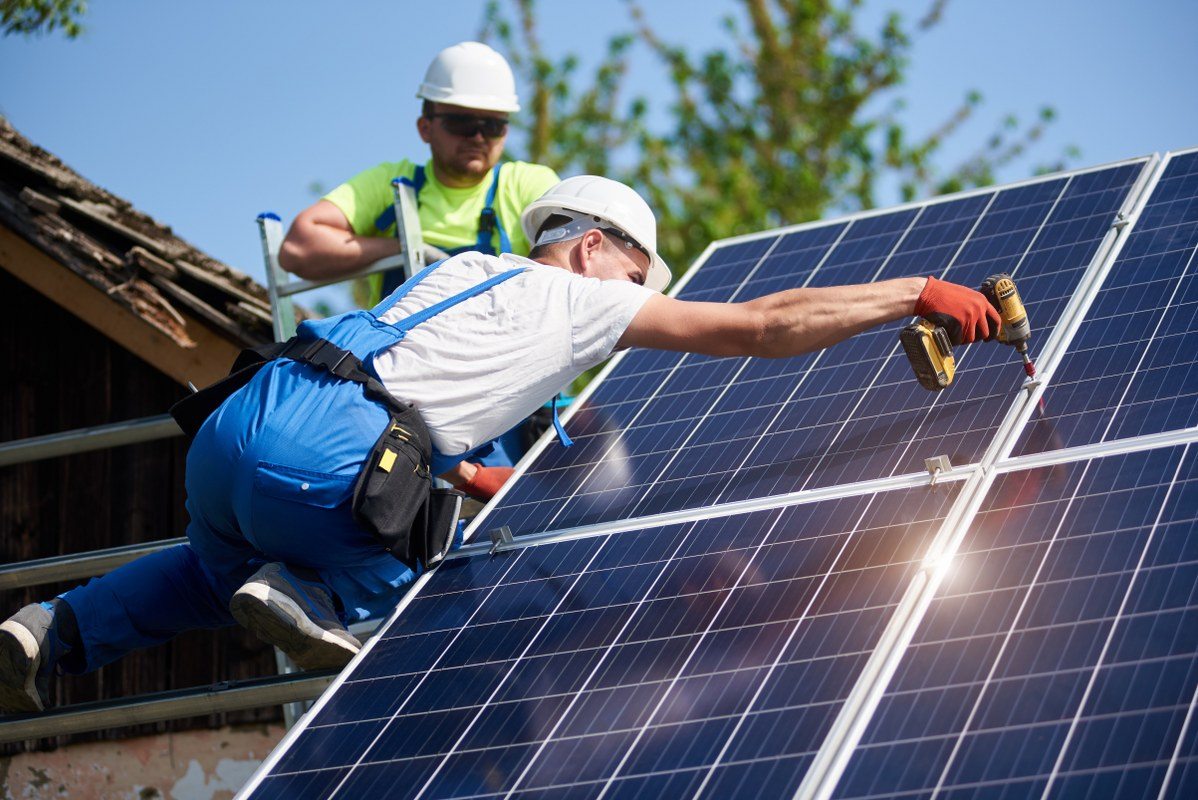
One doesn’t have to be at a genius level to understand why using solar energy is sensible. If the sun shines, the earth has a natural and renewable resource. In its infancy, the problem with solar power was its cost.
Things changed in the 1970s. The price came down, but at $20 a watt remained out of reach for average homeowners. Manufacturing solar cells, the backbone of solar power, has improved their efficiency, thus lowering costs to a mere $.50 a watt.
New technology brings affordability
Once a struggling industry battling the carbon-based giants of coal and big oil, solar power clearly will dominate in the coming years. The lack of pollutants means a cleaner, more sustainable environment for future generations. Fossil fuels can’t compete on this issue. The imminent rise of electric cars and trucks will spell explosive growth for the solar energy industry.
How does Solar energy work?
The sun is continually releasing photons. Manufacturers make solar panels with photovoltaic (a term related to producing electric current) cells. When sunlight hits the solar panels photons collide with and loosen electrons. The free-flowing electrons pass through a circuit and become electricity.
The photovoltaic (PV) modules create a direct current that converts to an alternating current, and when you click the remote, the TV goes on. Another component of solar energy is a solar battery. These batteries are for storing the electricity created by the panels. When the sun doesn’t shine the stored electricity will get used. In some states, one can sell the excess storage back to the utility company.
Growing in the solar power industry
Vivint Solar is one of the rising stars of the solar industry. They operate in 22 states. The company’s mission is to provide a cost-saving and clean alternative to traditional energy.
Vivint placed its headquarters in Utah. It went public in 2014 after its founding in 2011. To date, the industry credits Vivint for installing close to 200,000 solar panel systems as of March 2020.
Consultations are free at Vivint, and they look at each situation to determine the best product and system. Vivint has several purchase options available, always with an eye toward affordability. The most popular with customers is the power purchase model (PPA).
Product expansion.
Vivint moved beyond offering only rooftop solar systems in 2017. They moved into the electric vehicle (EV) charging and also added smart energy management. In July 2020, Sunrun, a competitor, gained Vivint for a reported $3.2 billion.